Tuscany in July
Tuscany in July: around 32°C, what crowds and prices to expect, what to do that month and a ready-made plan.
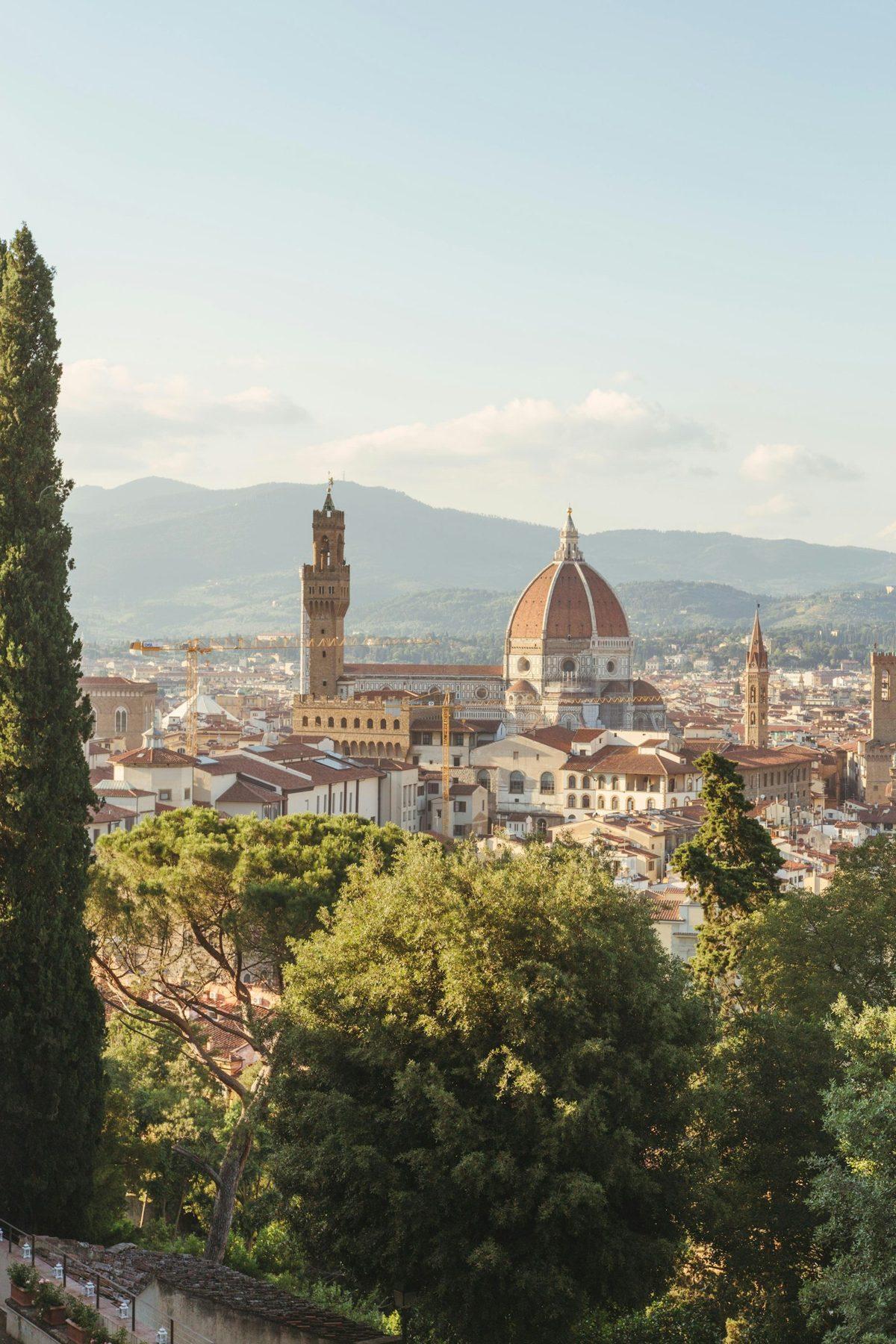
July is a perfectly good time for Tuscany: hot weather (around 32°C), just outside the peak, so prices and crowds are usually more relaxed.
Temperatures stay fairly steady through the month. The month before averages 28°C and the month after 32°C. Nights drop to around 19°C, and the month sees roughly 24 mm of rain (dry).
Temperature and rain: 2015–2024 averages (ERA5 reanalysis), Open-Meteo.com.
What to do in July
Duomo climb & Uffizi
Florence
Chianti wine day
Greve in Chianti
Val d'Orcia drive — Pienza & Montepulciano
Val d'Orcia
San Gimignano towers
San Gimignano
Lampredotto at Mercato Centrale
Florence
Pecorino and pici in Pienza
Pienza
A 5-day plan for July
Day 1
Florence
- Morning
Duomo climb & Uffizi
Florence
- Lunch
Lampredotto at Mercato Centrale
Florence
- Afternoon
Oltrarno artisan workshops
Florence
- Evening
Sunset at Piazzale Michelangelo
Florence
- Night
Wine bars of Santo Spirito
Florence
- Morning
Day 2
San Gimignano
- Morning
San Gimignano towers
San Gimignano
- Lunch
Pecorino and pici in Pienza
Pienza
- Afternoon
Siena's Piazza del Campo
Siena
- Evening
Bistecca dinner
Panzano
- Morning
Day 3
Greve in Chianti
- Morning
Chianti wine day
Greve in Chianti
- Morning
Day 4
Val d'Orcia
- Afternoon
Bagno Vignoni thermal pools
Val d'Orcia
- Afternoon
Day 5
Florence
Guides
Frequently asked questions
What is the best time to visit Tuscany?
April–June and September–October are ideal, with average highs of about 20–29°C — warm enough for long lunches outdoors without the peak heat. July and August are the hottest months, with highs around 32–33°C.
How many days do you need in Tuscany?
Plan about a week: two or three days in Florence, then the countryside — Chianti, Siena, San Gimignano and the Val d'Orcia. Distances are short but roads wind, so don't try to fit everything into one day.
Where is the best place to stay in Tuscany?
Chianti offers vineyard stays about an hour from Florence and Siena. In Florence, Oltrarno has artisan workshops and wine bars across the river from the crowds, while the Val d'Orcia is the postcard Tuscany of cypress roads and hill towns.