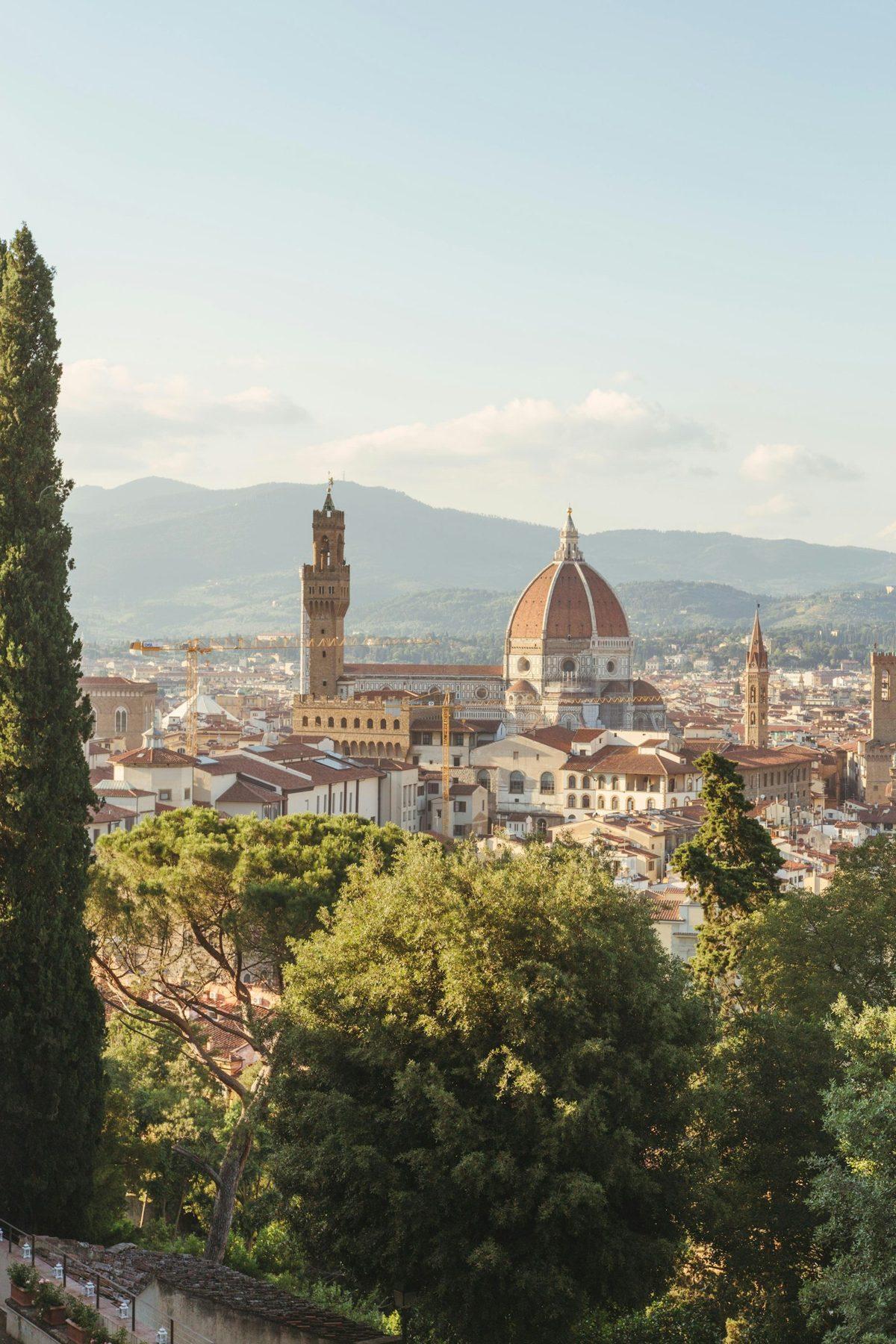
Italy · Central Italy
Tuscany
Hill towns, cypress roads and wine that tastes like the view.
Renaissance Florence, then the countryside: Chianti, Val d'Orcia and medieval towns best reached on winding roads.
- Best time to go
- April, May, June, September, October
- Public transport
- 35/100
- Need a car?
- Yes
- Daily budget
- €108 – €209
Where to stay
Chianti
Stay here for vineyard stays an hour from Florence and Siena.
Florence — Oltrarno
Stay here for artisan workshops and wine bars across the river from the crowds.
Val d'Orcia
Stay here for the postcard Tuscany of cypress roads and hill towns.
Getting around
Regional trains to Florence and Siena. Your Tuscany itinerary includes 4 countryside locations that are difficult to reach by public transport.
Arriving
- Airport to town
- A car makes the countryside easy; avoid ZTL (restricted traffic zones) in town centres. Trains link Florence, Pisa and Siena.
- Staying connected
- EU roaming applies for EU plans; otherwise use a data eSIM.
- Paying
- Cards widely accepted; small trattorie may prefer cash.
Itineraries
Ready-made day-by-day plans — adapt them to your dates and budget with AI.
What it costs
| Budget | €108 / per day |
|---|---|
| Comfortable | €209 / per day |
| Luxury | €556 / per day |
Indicative daily costs per person, for planning. Live prices come from our partners when you plan.
Worth booking ahead
9 h
Chianti Wine Tasting Day with Lunch at a Family Estate
Two wineries, a castle cellar and a long farmhouse lunch among the vines.
4 h
Florence Duomo Climb & Uffizi Small-Group Tour
Brunelleschi's dome at opening, then the Uffizi highlights with an art historian.
From the journal
Frequently asked questions
What is the best time to visit Tuscany?
April–June and September–October are ideal, with average highs of about 20–29°C — warm enough for long lunches outdoors without the peak heat. July and August are the hottest months, with highs around 32–33°C.
How many days do you need in Tuscany?
Plan about a week: two or three days in Florence, then the countryside — Chianti, Siena, San Gimignano and the Val d'Orcia. Distances are short but roads wind, so don't try to fit everything into one day.
Where is the best place to stay in Tuscany?
Chianti offers vineyard stays about an hour from Florence and Siena. In Florence, Oltrarno has artisan workshops and wine bars across the river from the crowds, while the Val d'Orcia is the postcard Tuscany of cypress roads and hill towns.
How do you get around Tuscany?
Regional trains link Florence, Pisa and Siena well, so a city-only trip works without a car. For the countryside a car is much easier; just avoid the ZTL restricted traffic zones in town centres.
Do you need a car in Tuscany?
For the countryside, yes — wineries, hill towns and the Val d'Orcia are hard to reach by public transport, and many wineries need a booking. If you're only visiting Florence and Siena, skip the car and take the train.