Getting Around the Amalfi Coast: Car or Ferry?
The coast road is one of the world's great drives, but in summer you won't want to be behind the wheel. Which way of travelling suits which trip.
· 5 min read
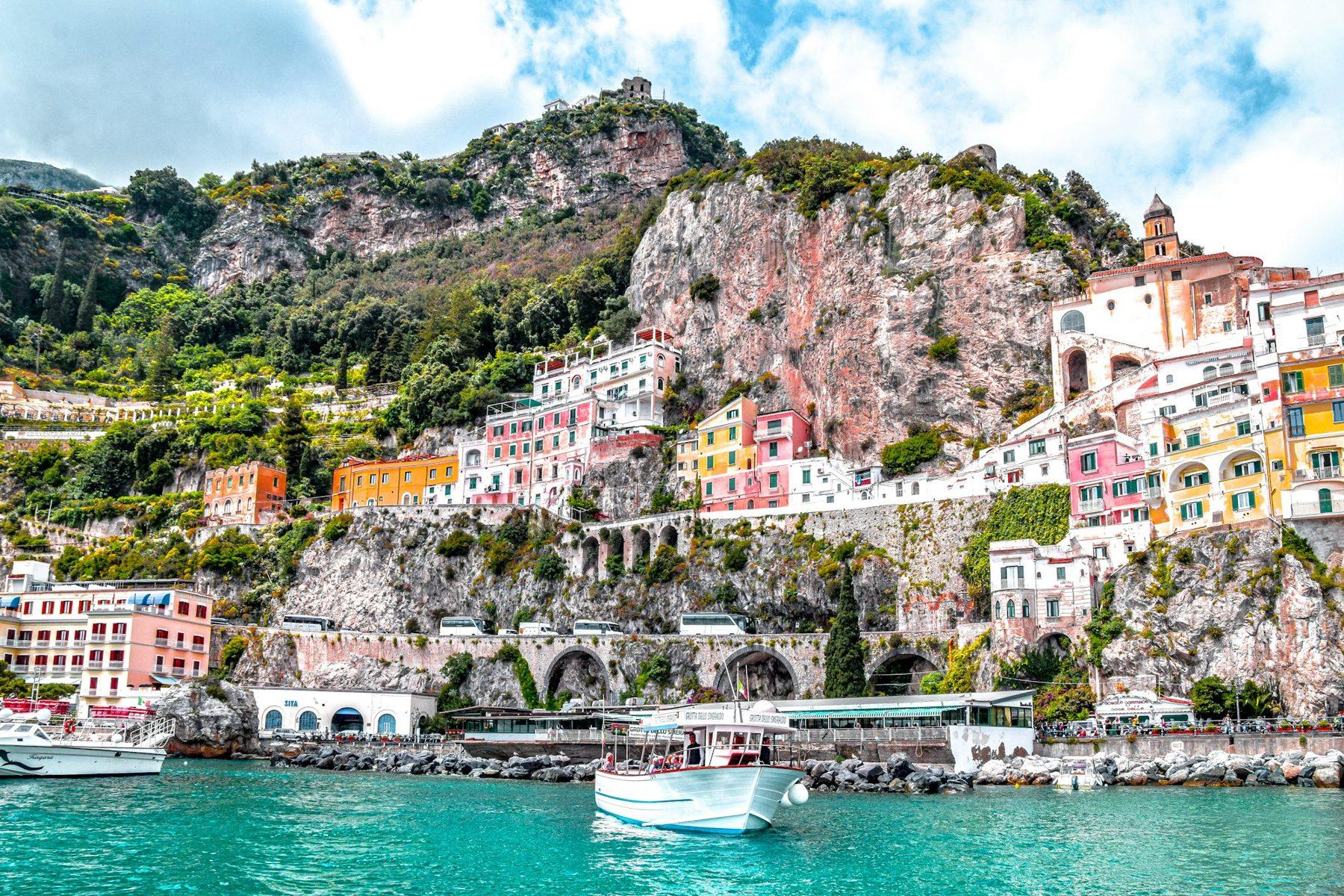
Getting around the Amalfi Coast is the first puzzle everyone hits when planning the trip. The coast road is often called one of the most beautiful drives in the world — and in summer, the same road can become a test of patience, with hairpin bends, long bus queues and nowhere to park. The short answer: in summer, travel by ferry and bus; take a car only in winter or if you're heading beyond the coast. The long answer depends on where you stay, when you go and what you want to see.
Getting around the Amalfi Coast: understand the geography first
The Amalfi Coast is the southern face of the Sorrento Peninsula, running from Positano to Vietri sul Mare. Towns climb steeply from the sea, and a single main road, the SS163 or Amalfitana, links them all.
The towns that matter:
- Positano: the most photogenic; steep, expensive and built on stairs.
- Praiano: close to Positano, quieter and relatively better value.
- Amalfi: the transport hub, where ferries and buses meet.
- Atrani: a tiny, calm village a short walk from Amalfi.
- Ravello: high above the sea, famous for its gardens and concerts. No harbour; you reach it by bus from Amalfi.
- Minori and Maiori: wider beaches, family-friendly and cheaper places to stay.
Three cities act as gateways: Naples (airport and main rail station), Sorrento to the west and Salerno to the east.
How to get from Naples to the coast
- Train plus ferry (via Salerno): train from Napoli Centrale to Salerno, then a ferry to Amalfi or Positano. In season, one of the most comfortable and scenic options.
- Train plus bus (via Sorrento): the Circumvesuviana commuter train from Naples to Sorrento, then a SITA bus to Positano and Amalfi. Cheap, but the train can be crowded and hot in summer, and it's tiring with big luggage.
- Airport buses: there are bus links from Naples airport towards Sorrento and Salerno; check the current timetable before you go.
- Private transfer: the most expensive but least stressful choice with luggage, children or a late arrival. Your hotel can usually arrange one.
Pompeii sits on the Circumvesuviana line between Naples and Sorrento — an ideal half-day stop on the way.
Ferries: the best way to travel in summer
In season, ferries are the fastest, most enjoyable and usually least stressful way between towns. Companies such as Travelmar run regular routes between Salerno, Amalfi, Minori, Maiori and Positano, with some lines connecting to Sorrento and Capri.
What to know:
- Season: services are busiest from spring to late October and drop sharply, or stop, in winter. Check current timetables on the operators' official sites.
- Weather: sailings can be cancelled in rough seas. If you have an evening flight, don't make your last day depend on a ferry.
- Tickets: available at harbour kiosks or online; in midsummer, buy ahead for popular times.
- Luggage: large bags may carry a surcharge or be limited.
The real joy of the ferry is the view. Seeing the towns from the water is the best way to understand the coast, and arriving in Positano by sea is an experience in itself.
SITA buses: cheap, but bring patience
SITA buses link every town on the coast with Sorrento and Salerno, run all year and are the cheapest option. In summer, though:
- Buses arrive full, and at some stops you may not get on.
- The bends are tight; if you get motion sick, sit near the front.
- Tickets are bought in advance, not on board — at tobacconists (tabacchi), newsstands or via apps.
Travelling from Sorrento towards Positano and Amalfi, sit on the right-hand side for the sea views. For Ravello, the buses from Amalfi are the easiest route up.
The car: when it makes sense and when it doesn't
For most travellers in summer, we don't recommend driving the Amalfi Coast. Here's why:
- Parking: spaces in Positano and Amalfi are very limited and very expensive, and many hotels have no parking or charge extra.
- The road: the SS163 is narrow, winding and shared with buses. Meeting a bus on a hairpin is stressful even for experienced drivers.
- Traffic restrictions: in recent years, local authorities have tried measures such as number-plate-based restrictions for non-resident vehicles in peak periods. Check the current rules before you go.
- ZTL: parts of town centres are limited-traffic zones, and driving in without a permit means a fine.
A car genuinely helps when:
- You're travelling between November and March, when traffic is light and ferries don't run.
- You're staying in villages above the coast or at an agriturismo.
- You're adding sights beyond the coast, such as the temples of Paestum, Pompeii or the Cilento.
- You're combining the coast with a region where the car truly wins, like Tuscany — in which case consider dropping the car before you reach the coast. Our slow week in Tuscany is the opposite case.
Private drivers and water taxis
If the budget allows, a private driver (in Italy, a licensed NCC service) lets you enjoy the coast road's views without the bends or the parking. It makes particular sense for airport transfers or a half-day trip up to Ravello.
Water taxis and private boats offer short, flexible hops between towns. A shared or private boat day is the best way to see the coast's caves and coves, and for many travellers it's the most memorable day of the trip.
Which option suits which trip?
- First visit, summer, 4–5 days: stay in Amalfi or Positano, use ferries and SITA buses. Don't rent a car.
- On a budget: stay in Salerno, Minori or Maiori and travel by ferry and bus.
- Honeymoon or comfort: Positano or Ravello, a private driver for transfers and a private boat for one day.
- Winter or beyond-the-coast routes: a car makes sense, but park outside town centres.
- Hikers: take the bus up to Bomerano in Agerola for the Path of the Gods (Sentiero degli Dei), walk to Nocelle and take the steps down to Positano. A car is only a burden on this route.
A car-free 4-day route
- Day 1: fly into Naples, train to Salerno, ferry to Amalfi. Evening around Amalfi Cathedral.
- Day 2: early bus to Ravello for the gardens of Villa Rufolo and Villa Cimbrone. Afternoon swim in Atrani.
- Day 3: ferry to Positano. Beach in the afternoon; sunset and seafood in Praiano.
- Day 4: the Path of the Gods or a boat day along the coast. Next morning, ferry and train back to Naples.
A few practical habits help on any version of this trip. Pack light: stairs, piers and full buses punish big suitcases, and many Positano hotels can arrange a porter (facchino). Start early, since ferries and buses are busiest in the afternoon. Leave a buffer before your flight home. And choose your season well — May, June and September offer working transport with relatively manageable crowds.
Planning on a tighter budget? Read our Mediterranean trips under €1,000, and see the Amalfi Coast destination guide for hotels and experiences.
Frequently asked questions
Can you do the Amalfi Coast without a car?
Yes, and in season it's the best way. Ferries link Salerno, Amalfi, Minori, Maiori and Positano, and SITA buses reach every coastal town and Ravello. In summer a car is usually a disadvantage because of parking and traffic.
How do you get from Naples to Positano?
In season, the most comfortable route is a train from Naples to Salerno and a ferry to Positano. Alternatively, take the Circumvesuviana train to Sorrento and a SITA bus, or book a private transfer.
When do Amalfi Coast ferries run?
Services are busiest from spring to late October and are greatly reduced or suspended in winter. Sailings can be cancelled in rough seas, so check current timetables on the operators' official sites.
Where is the best place to stay on the Amalfi Coast without a car?
Amalfi town, because it's the hub for both ferries and buses. Positano is the most beautiful base, Ravello and Praiano the quietest, and Minori, Maiori or Salerno the best value.
Wayline Editors · Travel desk
The Wayline editorial team plans trips for a living — and writes down what actually works.
- #amalfi-coast
- #italy
- #positano
- #ferries
- #transport